
Chapter 1: Reliable, Scalable, Maintainable Application
Published:
Common module:
- databases
- caches
- search indexes (query)
- stream processing
- batch processing
Three concerns that are important in most sofeware systems:
- Reliability 可靠性
- The system should continue to work correctly even in the face of adversity (硬體/軟體/人為錯誤)
- Scalability 擴展性
- As the system grows, there should be reasonable ways of dealing with that.
- Maintainability 維護性
- Over time, many different people will work on the system. e.g., 開發 / 維運 … 系統應該要所有人再其上工作時都保有生產力.
可靠性
即使發生某些問題,系統仍然可以繼續正常運作
faults 故障 ≠ failure 失效
故障 faults 是某部分的錯誤,失效 failure 是整個 system 無法運作
能夠容忍故障的系統稱做 resilient system
- 硬體故障: 壞軌…
- 軟體錯誤:
- 人為失誤
對使用者負責 !!
擴展性
即使今天能可靠的工作,無法確保明天也能可靠的工作? why?
e.g., 負載增加 / 資料爆炸
Load 負載
- load parameters: 負載指標 e.g., (request per sec / database read write ratio / cache hit rate )
- Example:
- Twitter :
postandhome timeline(2012) post發布貼文 : 4.6k requests/sec, peak 12k requests/sechome timeline時間軸主頁 : 300k requests/sec
問題點: fan-out (某個 request 進來,需要對其他服務發出更多 request)
- 當
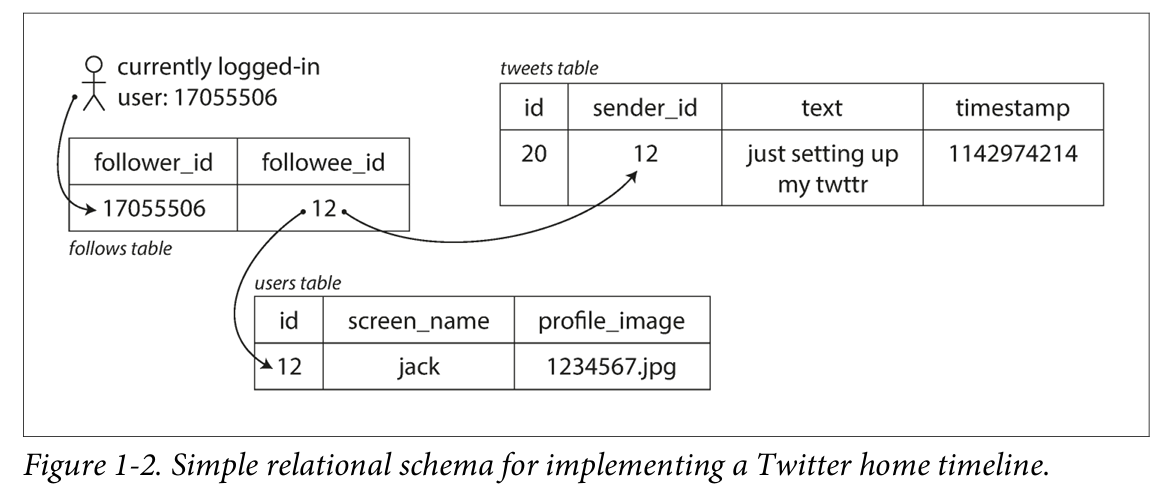
post發生就存到 tweets table,home timeline發生就根據 user 的 followee ids 找到所有對應的貼文後依照時間排序
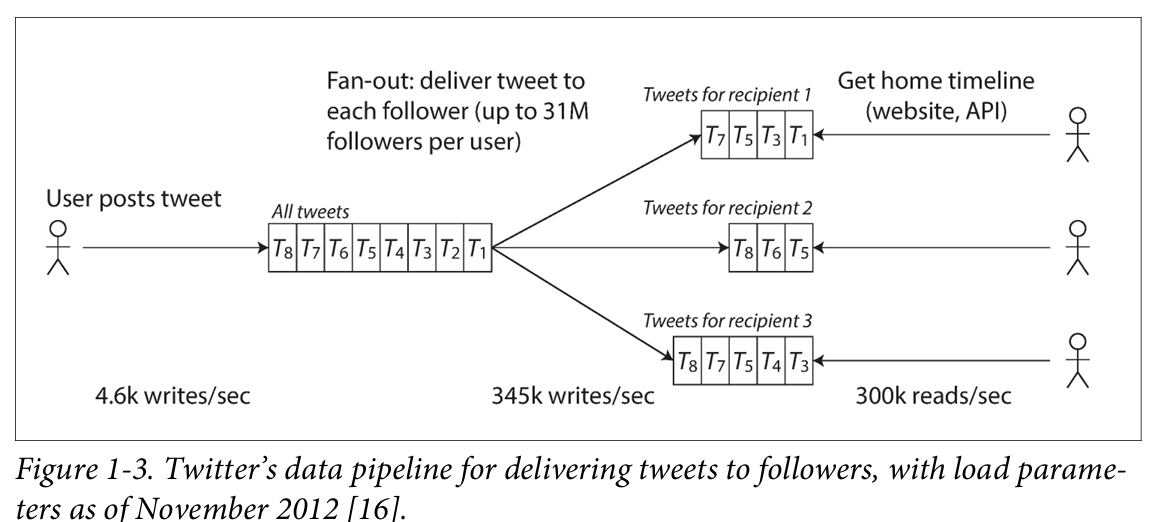
- 當 post 發生就推送到每個人的 timeline 上, 主頁打開時就得讀取快很多
- Twitter :
- Result:
- 2 > 1,
home timeline>post - 2的缺點: 名星有大量的 followers
- combine 1 & 2
- 2 > 1,
Performance 性能
當負載增加,resource quota 不變,怎辦
常見的參數: through put / response time
- Pitfall: latency ≠ response time
- Evaluate Response time: don’t use average time use median (percentile) e.g., 50p, 95p, 99p
- from Amazon response time 每增加 100ms, 銷售額 -1%
Approaches for Coping with Load (對應負載壓力)
- vertical scaling 垂直擴展: 強化機器 (scaling up)
- horizontal scaling 水平擴展: 量化機器 (scaling out)
- for 新產品的 proirity: 快速跌帶 > 假想負載擴展
可維護性
軟體大部分的成本並不是落在最初的開發階段,而是在 maintain (e.g., fixing bugs, keeping its system operational, investigating failures, adapting it to new platforms, modifying it for new cases, repaying technical debt, add new features)
故 開發時應該要注意
- Operability 可維運性
- Simplicity 簡單性
- Evolvability 可演化性
可維運性 (making life easy for operations)
保持可穩定運行最重要的一環
- Monitoring mechanism
- Tracking down problems / failures
- Keeping software Updated (?)
- Deployment, configuration
- Documentation
- Preserving the organization’s knowledge about system even people come and go
- …
簡單性 (managing complexity)
小專案很容易就能寫出簡單又漂亮的程式碼,但隨著時間推進就會變成 big ball of mud
key to solve: 好的抽象化設計
可演化性 (making change easy)
很少有永遠不變的系統設計,永遠都有新case / 新 feature / update …
組織流程: Agile
更安全的環境: TDD
容易讀: 軟工 相關的東東