
Chapter 2: Data Models and Query Languages
Published:
Data models
資料是軟體開發中最重要的部分,他影響軟體編寫方式,與我們的思考方式
e.g., 沒有大家的貼文,我們滑 IG 有意義嗎?
Relational Model Versus Document Model
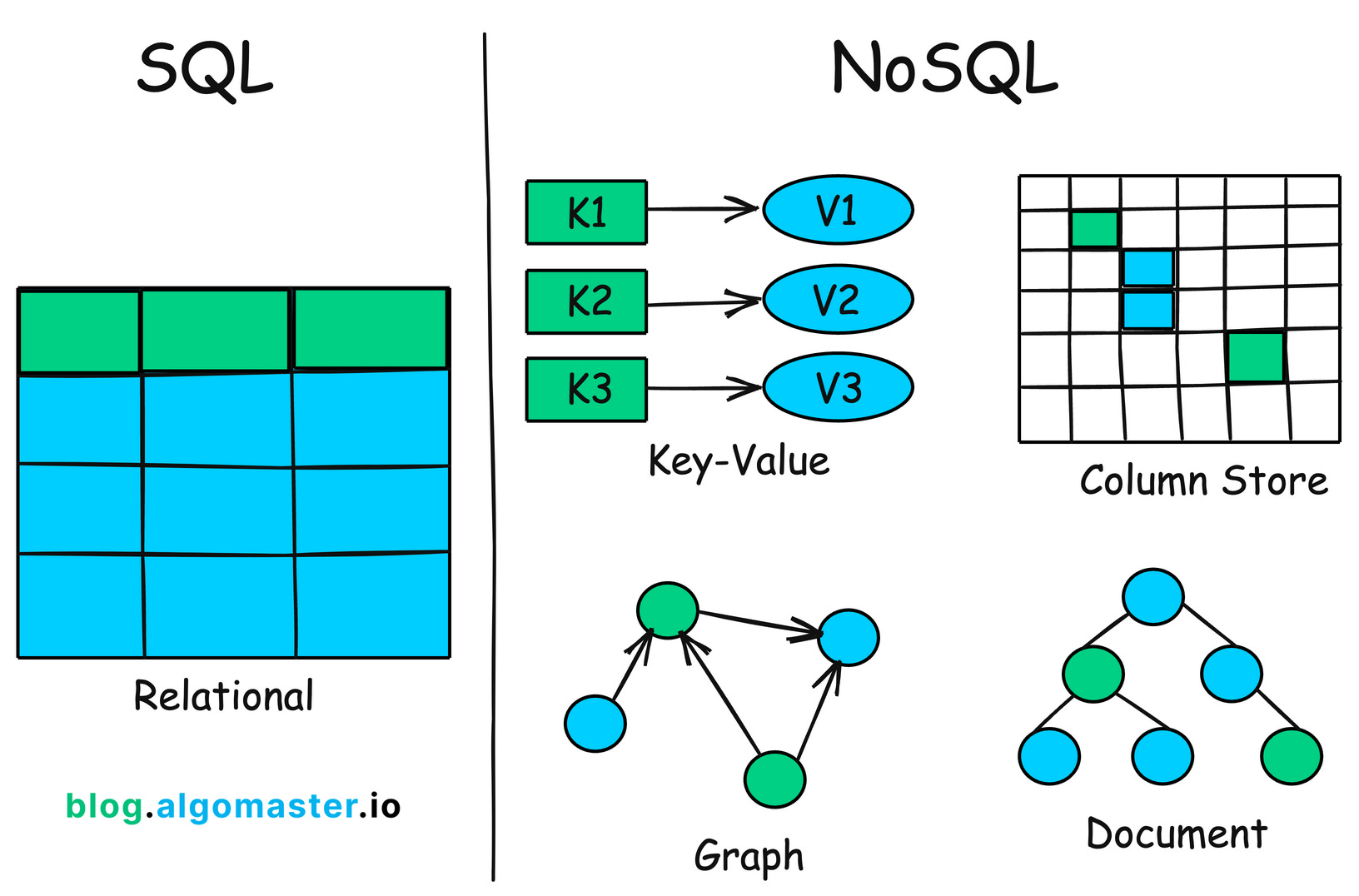
現今大部分我們看到內容還是由 relational database 提供
- NoSQL: Not Only SQL
- The adoption of NoSQL databases is driven by:
- A need for greater scalability than RDBMS, including very large datasets or very high write throughput
free and open source software- Specialized query operations that are not well supported by the relational model
- Graph Traversal Queries / Hierarchical Data Queries / Text Search and Ranking …
Examples
### 1. Graph Traversal Queries
- Use Case: Finding all friends of friends in a social network.
- Problem: SQL struggles with recursive relationships or deep traversals.
- Better Fit: Graph databases (e.g., Neo4j, ArangoDB) with languages like Cypher or Gremlin.
### 2. Hierarchical Data Queries
- Use Case: Organizational charts, file system trees.
- Problem: Representing and querying hierarchical data (like parent-child trees) requires complex recursive CTEs or adjacency list hacks in SQL.
- Better Fit: Document databases (e.g., MongoDB), or graph databases.
### 3. Text Search and Ranking
- Use Case: Full-text search with relevance scoring, stemming, synonyms.
- Problem: SQL is limited in natural language relevance scoring and inverted index operations.
- Better Fit: Search engines like Elasticsearch or Apache Solr.
- Frustration with the restrictiveness of relational schemas, desire for a more dynamic and expressive data model
- The adoption of NoSQL databases is driven by:
物件關聯的不匹配 (The Object-Relational Mismatch) (relational model 的弱點)
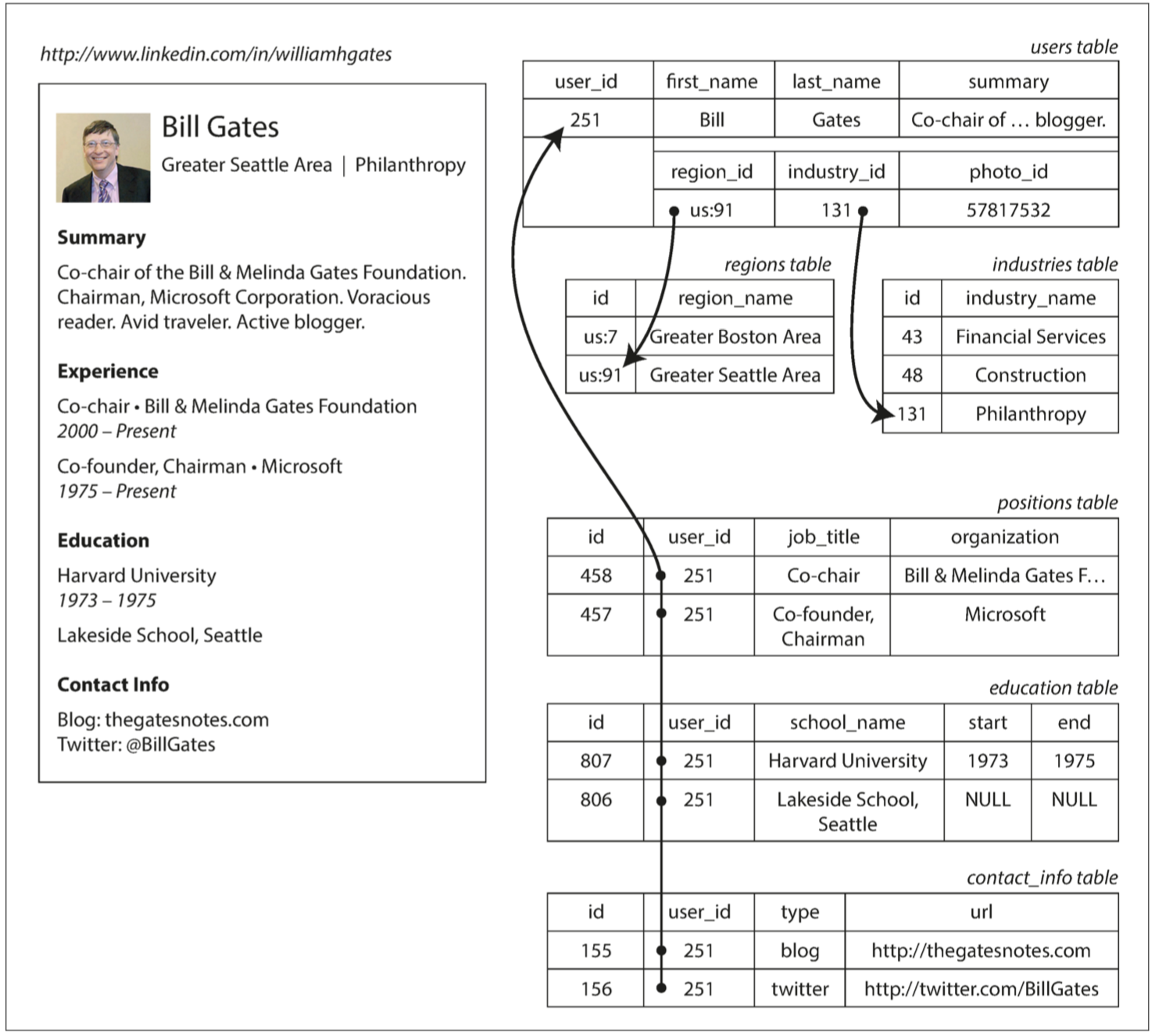
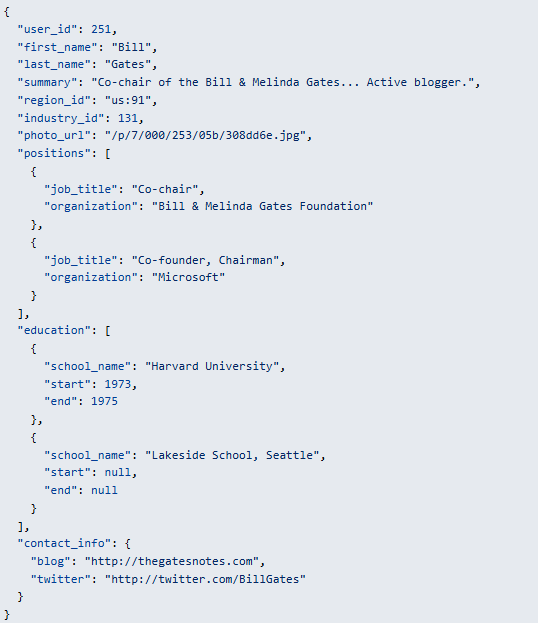
- JSON 模型,減少了 program 與 storage 之間的不匹配 → JSON 有更好的 (locality)
- Relational: 查多個表
- JSON: 一個查詢就夠了
Many-to-One and Many-to-Many Relationships (document model 的弱點)
- What is normalization?
- 當一個 data 出現在很多地方,我們可用一個 ID 代表他們,並且對 ID 進行定義 (有點類似抽出重複的扣?)
- 多對一
- 解釋:多篇文章(Article)「多」→ 對應到同一個作者(Author)「一」
- 多對多 (需要 join table)
- Amy 選了 Math 和 Physics
- Ben 選了 Math
一位學生可選多門課;一門課也可有多位學生。
Document Databases 重演歷史?
多對一 & 一對多,好像都沒辦法很好的支持
- Hierarchical model (tree)
- Network model (node can have multiple parents)
- Relational model (SQL)
Document Database → 有點像是 Hierarchical model,但 document model 有一對多 & 多對多的能力
document model 多對多 一對多 table
關係類型 表達方式 適合情境 一對多 嵌入子文件 關聯緊密、資料量小 一對多 使用 _id參照關聯鬆散、資料獨立性高 多對多 互相記 ID 陣列 資料不大、查詢頻繁 多對多 使用中介集合 資料量大、結構複雜、彈性佳
Relational database vs Document database (conclusion)
- 簡化與其 co-op 的應用程式代碼? it depends
- 如果應用很多 展示整個 document 的頁面,e.g., NAS 非常適合
- 組成一個 document 只需要 1 次 read
- relational database 需要多次
- 有多對多的應用情境,e.g., 需要知道課被誰選,誰選了什麼課 那 document database 就沒那麼適合
- 如果應用很多 展示整個 document 的頁面,e.g., NAS 非常適合
- 靈活性
- Document model 是 schemaless (?), schema on read (o)
- Relational model: schema on write
- 導致問題? Relational model 變更 schema 速度緩慢 (有改進方法)
- Scenario:
- collection 中的 items 不都具有相同結構. e.g., Synology NAS spec
- or 資料結構由外部決定
- 局部性
- 儲存局部性優勢 (document model)
- 注意: 僅限小修改有利 (更改後不影響整個 document 的大小, e.g., float → float) dict (?)
- 相似的地方
- 雙方都在進步
- relational model → locality 優化
- document model → 多對多能力
資料查詢語言
與資料庫互動的方法 查詢
- 命令式 (imperative)
- manually operation. e.g., 寫個 for loop 拿出裡面特定的 objects
function getSharks() { var sharks = []; for (var i = 0; i < animals.length; i++) { if (animals[i].family === "Sharks") { sharks.push(animals[i]); } } return sharks; } - 宣告式 (declarative)
- don’t need to know the implementations
SELECT * FROM animals WHERE family ='Sharks';有種抽象抽的很好的概念,底下可以平行優化 (感覺適合 GPU 當作搜尋引擎)
MapReduce
介於 命令式與宣告式 之間的一種查詢模式 (感謝 Google ),提供能處理更複雜的搜尋
- 可支援跨多台機器處理大量資料,甚至部分 NoSQL 也有支援部分功能 e.g., MongoDB
MapReduce → Map & Reduce
- map (collect): 有點類似 declarative 處理大量資料 (?)
- reduce (fold / inject): 再用 imperative 處理細節 (?)
 db.observations.mapReduce(function map() {
         var year = this.observationTimestamp.getFullYear();
         var month = this.observationTimestamp.getMonth() + 1;
         emit(year + "-" + month, this.numAnimals);
     },
     function reduce(key, values) {
         return Array.sum(values);
     },
     {
         query: {
           family: "Sharks"
         },
         out: "monthlySharkReport"
     });
Graph data model
更適合用在大量的多對多資料,用 Graph 處理資料會更自然 e.g., 社交網絡 / 推薦系統 / 知識圖譜
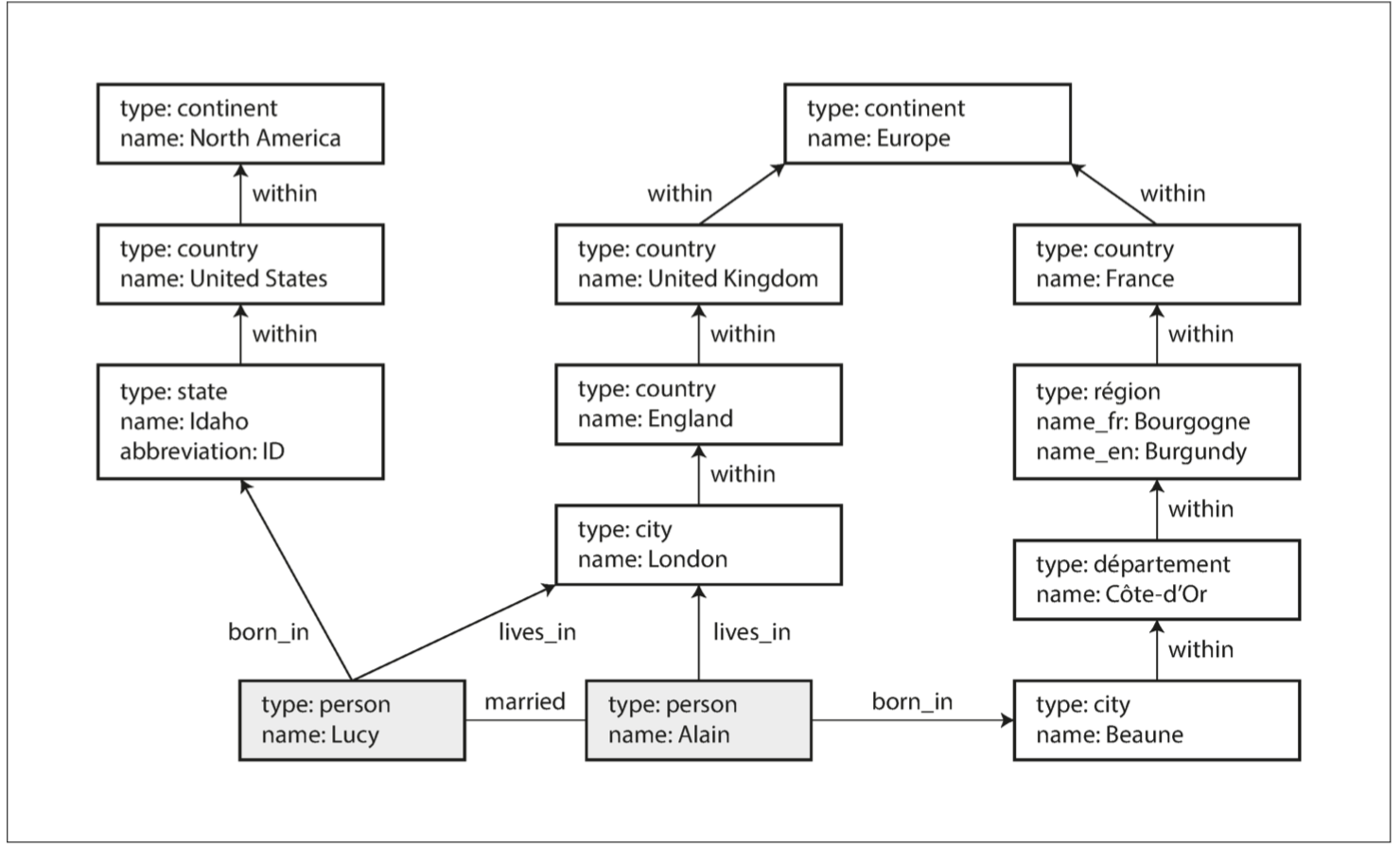
Graph 的組成
Vertices: 代表實體
Edges: 代表實體間的關係
Properties: 可加在節點或邊上,儲存詳細資料
Cypher (Graph 的查詢與法)
查詢所有從美國移民到歐洲的人
MATCH
  (person) -[:BORN_IN]->  () -[:WITHIN*0..]-> (us:Location {name:'United States'}),
  (person) -[:LIVES_IN]-> () -[:WITHIN*0..]-> (eu:Location {name:'Europe'})
RETURN person.name