
Chapter 3: Storage and Retrieval
Published:
Chapter 3: Storage and Retrieval
認識資料庫內部是如何儲存跟檢索的 (why?)
相對底層的東西,更認識資料庫。有點類似我們為何要學 OS?
- 有點類似我們為何要學 OS?
- 你平常用電腦很順,但遇到效能瓶頸、記憶體爆掉、或多工效率低時,只有理解 OS 如何排程、管理記憶體、處理 I/O,才能調整設定、寫出更有效率的程式,甚至解釋出為什麼某些情境下會慢。
- 例:調整 swap 設定、理解 thread/context switch 開銷、理解 cache hit/miss。
提升 know how ,在遇到問題 e.g., 資料庫瓶頸能知道該發生什麼事情與參數調整
Data Structures That Power Your Database
認識兩大儲存引擎:
日誌結構 (log-structured) & 分頁導向 (page-oriented)
log structured
顧名思義就是log
用兩隻 bash func 就可以變成資料庫了!?
db_set(){
	echo "$1,$2" >> database
}

db_get(){
	grep "^$1," database | sed -e "s/^$1,//" | tail -n 1
}
# database
123,{"name":"Jasper"}
456,{"name":"Jack"}
123,{"name":"Jerry"}
123,{"name":"Jeffery"}
456,{"name":"Julian"}
What’s the problems?
- write O(1) / read O(n)
- save lot of useless data
解決 read O(n) 問題:
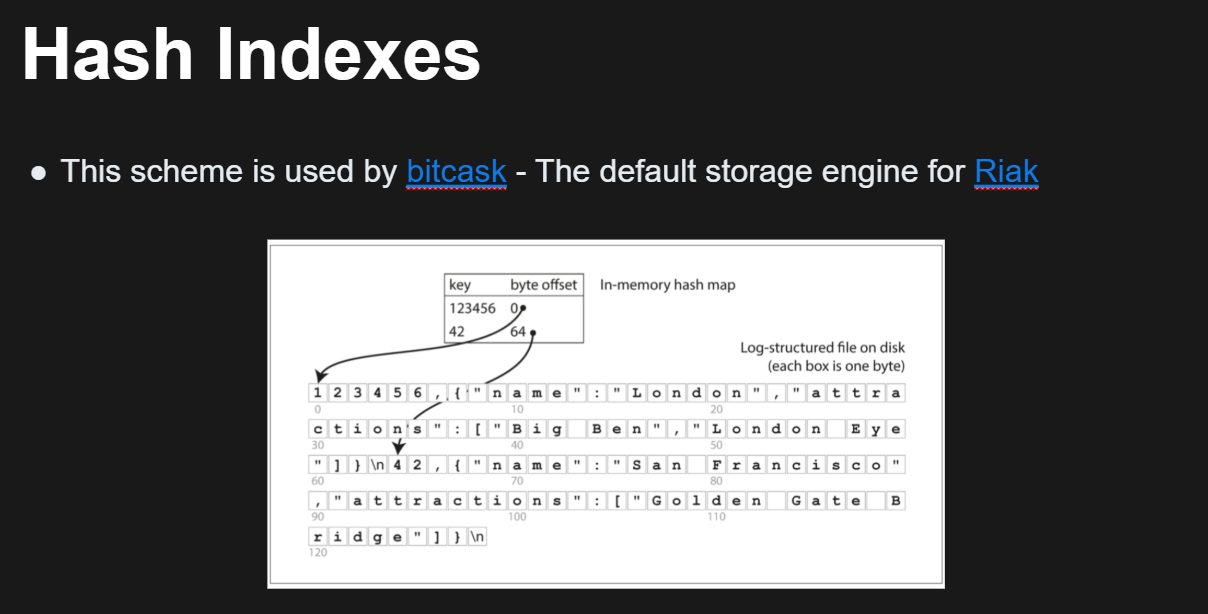
解決存一堆拉基的問題:
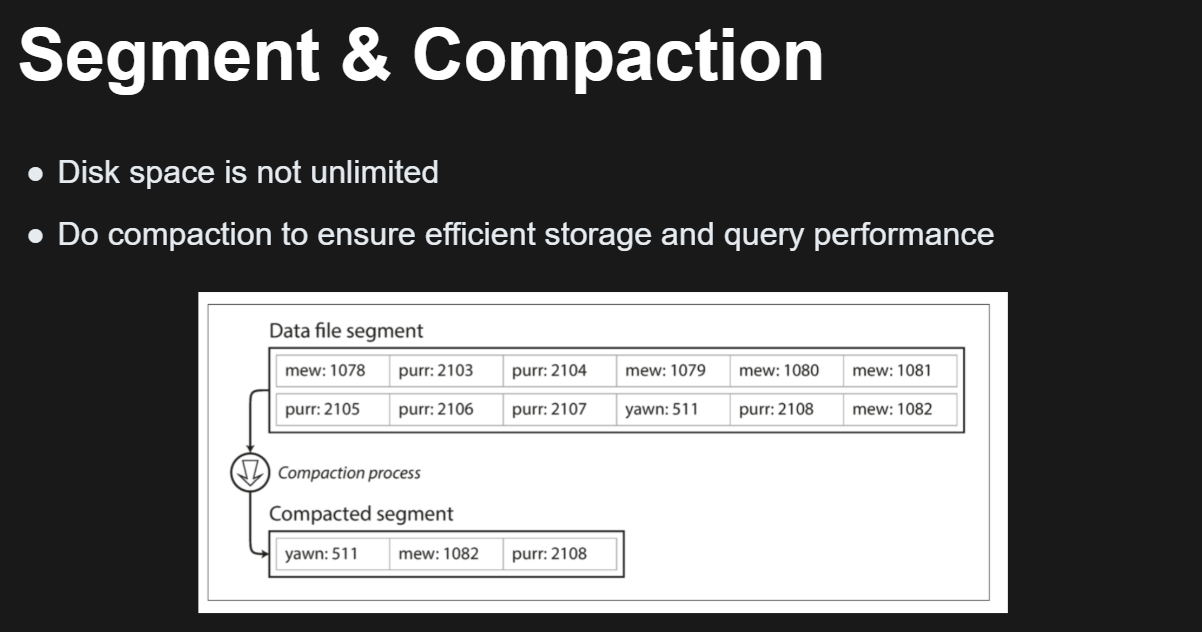
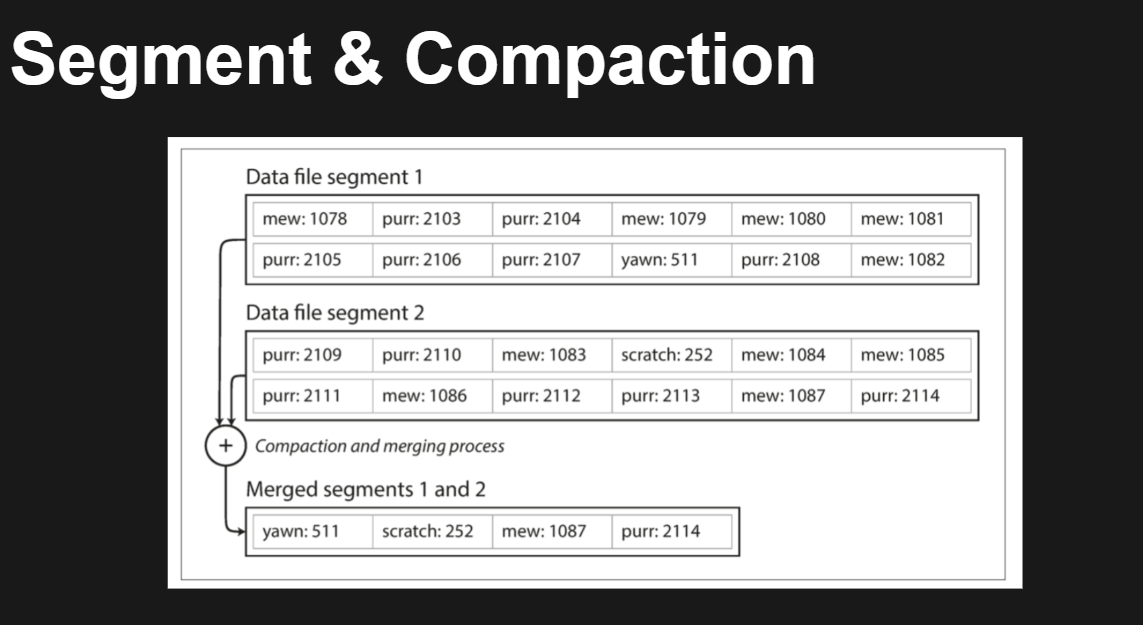
Two more Questions:
- Memory 不是無限大的,hash table 不可能存所有的 key offset pair
- Range Query issue, e.g., 查詢 key0001 ~ key9999 的資料 …
SSTable (Sorted String Table)
Advantage of SSTable
- Merge segments is simple and efficient (in disk)
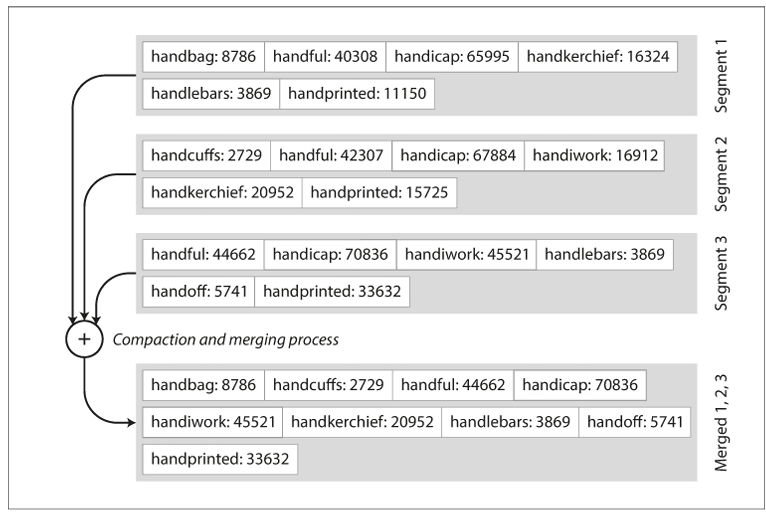
- no longer need to keep an index of all the keys in memory (解決了 mem 不足問題)
- 查詢也用 binary search 就好
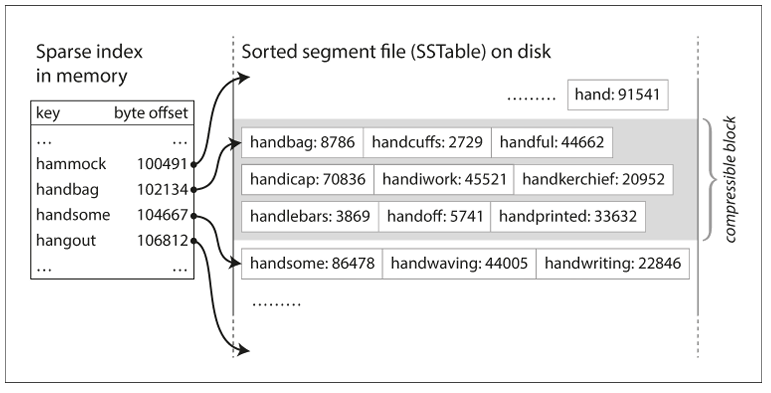
SSTable 解決了 mem 不足問題 / 也解決了
New Question:
如何確保要寫入的 segment 是 sorted 的? 用 balanced tree (e.g., RB Tree / AVL Tree)
新的寫入發生時,會先寫入到 mem 中的 balanced tree (有時稱做 memtable)
現在 log structure 儲存引擎以如下方式工作:
- 有新寫入時,將其新增到記憶體中的平衡樹資料結構(例如紅黑樹)。這個記憶體樹有時被稱為 記憶體表(memtable)。
- 當 memtable 大於 threadhold,將其作為 SSTable 檔案寫入硬碟。這可以高效地完成,因為樹已經維護了按鍵排序的鍵值對。新的 SSTable 檔案將成為資料庫中最新的段。當該 SSTable 被寫入硬碟時,新的寫入可以在一個新的記憶體表例項上繼續進行。
- 收到讀取請求時,首先嘗試在記憶體表中找到對應的鍵,如果沒有就在最近的硬碟段中尋找,如果還沒有就在下一個較舊的段中繼續尋找,以此類推。
- 時不時地,在後臺執行一個合併和壓縮過程,以合併段檔案並將已覆蓋或已刪除的值丟棄掉。
Handle crash: use a really log. to store the most recent write.
Case study: LevelDB / RocksDB
The terms (SSTable / memtable) are intertuced by Google’s bitTable paper
Naming: LSM-Tree (Log structure Merge tree)
- Optimizations
- Bloom filters
- Leveled compaction
B Tree
The most widely used indexing structure.
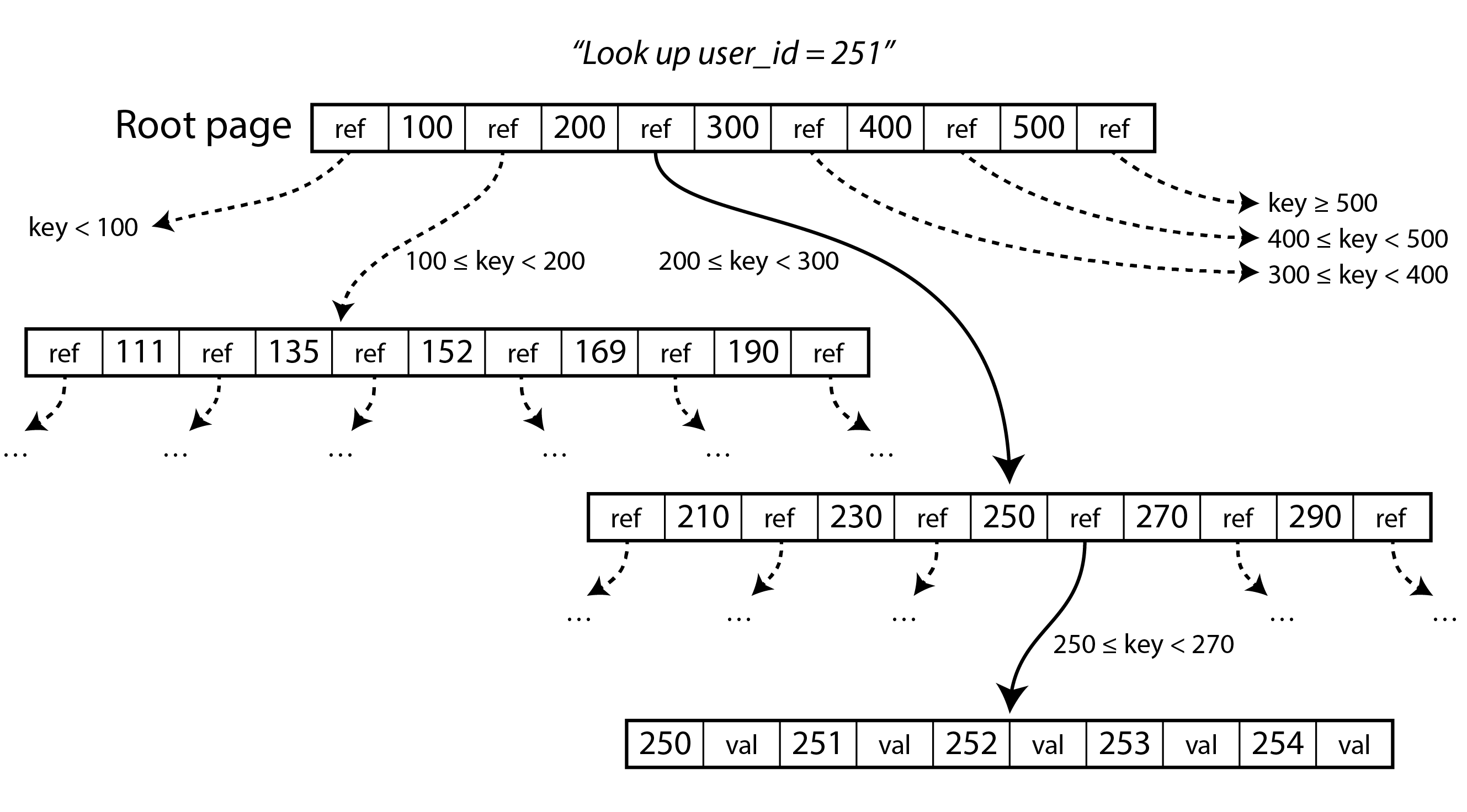
一樣有類似的 sorted 架構方便查找,但…
- Different design philosophy:
- B-Tree break the database down intoo fixed-size blocks. e.g., 4KB / pgSQL 8KB / MySQL 16KB
- 這種設計跟底層非常像
- Page 中:
- key / ref / value (only in leaf in B+ tree)
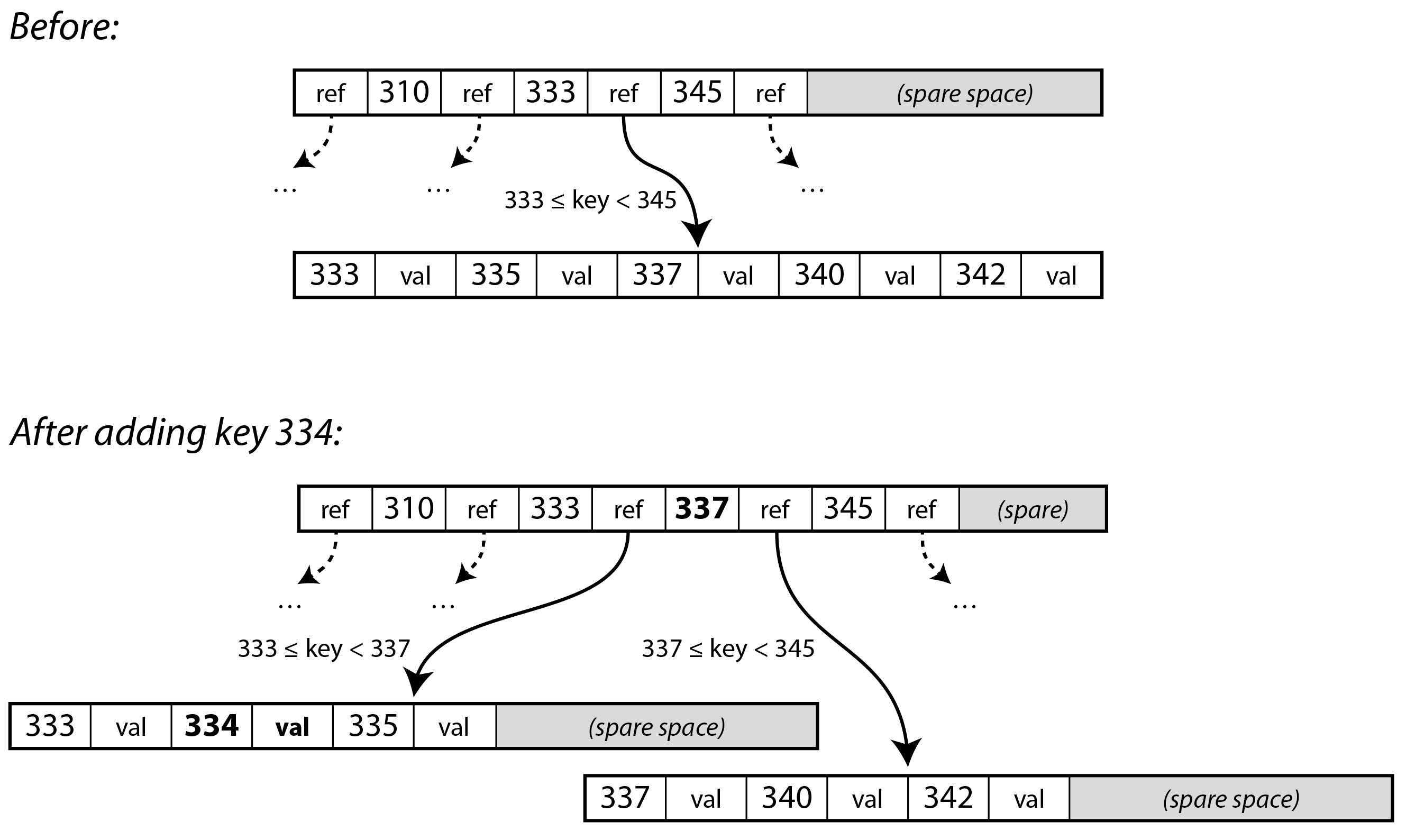
- 當 page is full (branch factor)
提升 B tree 可靠
問題:寫入是直接在 BTree 上執行, 若多個寫入執行中時 crash 發生的話 會污染整個樹,有幾個解決方法
- 透過 write-ahead log,WAL 解決 (log 用於復原)
- copy on write,複製一份出來,寫入完再換 reference
B-tree vs LSM-tree
- 經驗來說…
- LSM-tree 更適合 寫入密集型應用
- B-tree 對讀取更快
- moreover 有時候也能再 LSM tree 中看到 B tree 的身影
- 弱點:
- LSM-tree:
- write amplification (多做很多 operation)
- B-tree:
- fragmentation issue (太多瑣碎的的 pages)
- LSM-tree:
other db engineer
- mem db
- VoltDB / SingleStore / Oracle TimesTen / RAMCloud
- full context …
OLTP (online transaction processing)
- GB ~ TB
- read & write
OLAP (Online analytical processing)
- TB ~ PB
- calculation during access
- Warehouse
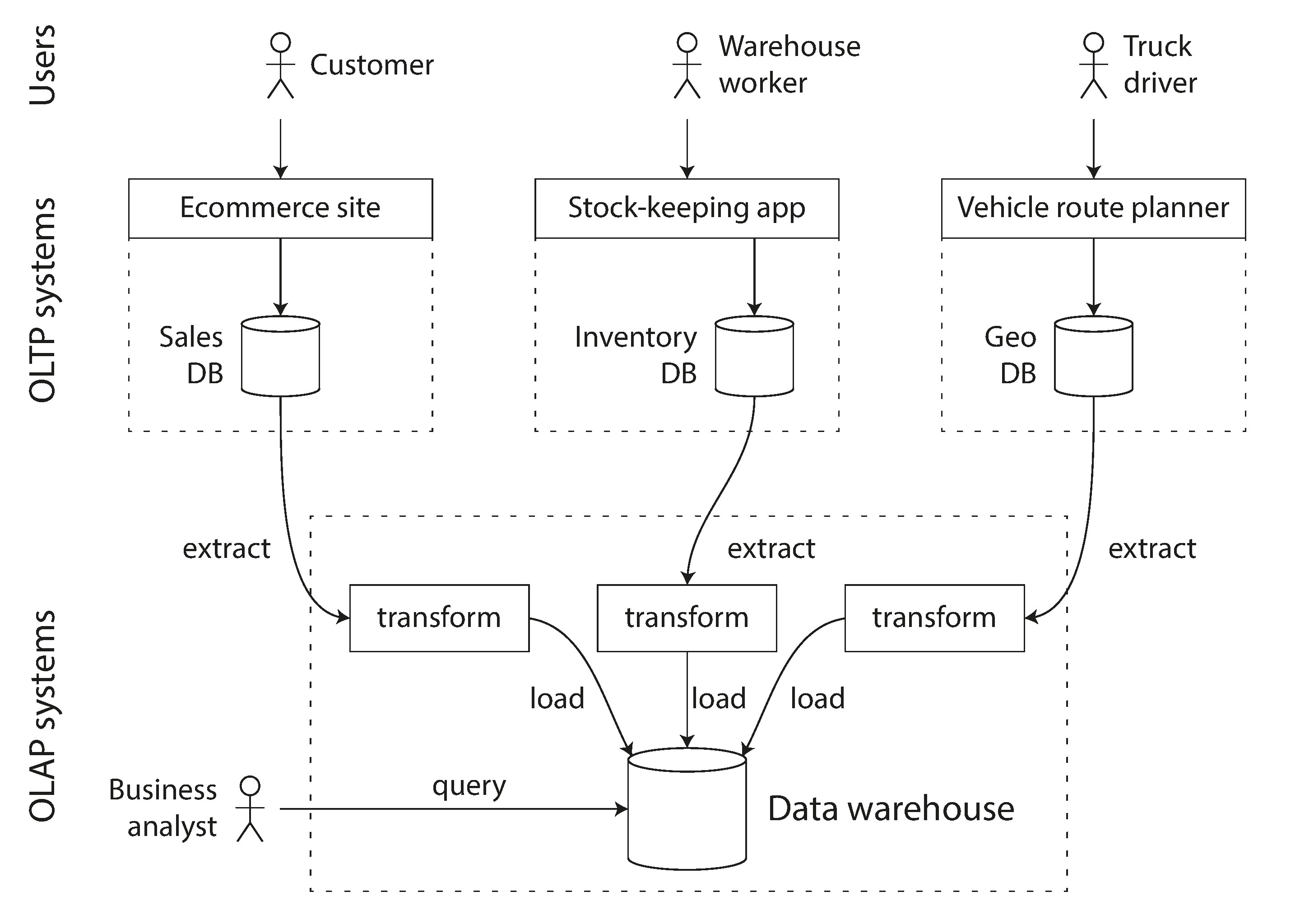
通常有 ETL (extract / transform / load)
Conclusion
- OLTP
- B-tree
- LSM-tree
- OLAP
- Warehouse
to be continue…